

Minerkeeper
- Project requirements
- Project description
- System equipment
- Functionality and logical scheme
- How the system works
- Android app
- Conclusion
Project Requirements
Mining systems, whether based on video cards or ASICs, are electronic devices with continuous operation
and with particular environmental needs.
The biggest problem with these systems is the disposal of heat which, if not properly evacuated (or in some
cases used), will lead to malfunctions over time and, in the worst case, potential damage to the miner or a
source of fire ignition.
There are also other issues that affect business continuity and the ability to generate profit and are listed
below.
- Stabilized power source
- Electricity consumption
- Noise generated by cooling fans
- Correct heat disposal
- Possible use of heat
- Remote operation verification
- Possibility of detecting an alarm and sending it
Project description
This project aims to create a small miner verification system that is independent from the miner itself. There
are some operating systems (for example SMOS) that have miner verification features but are integrated
into the miner software itself. The presence of an independent system allows for the addition of miner
control and management features in the electrical and environmental fields, leaving the door open to future
implementations of additional features.
The additional components required (temperature probes, electronic components, displays) are also easily
available and low-cost, making Miner Keeper an easy project to implement.
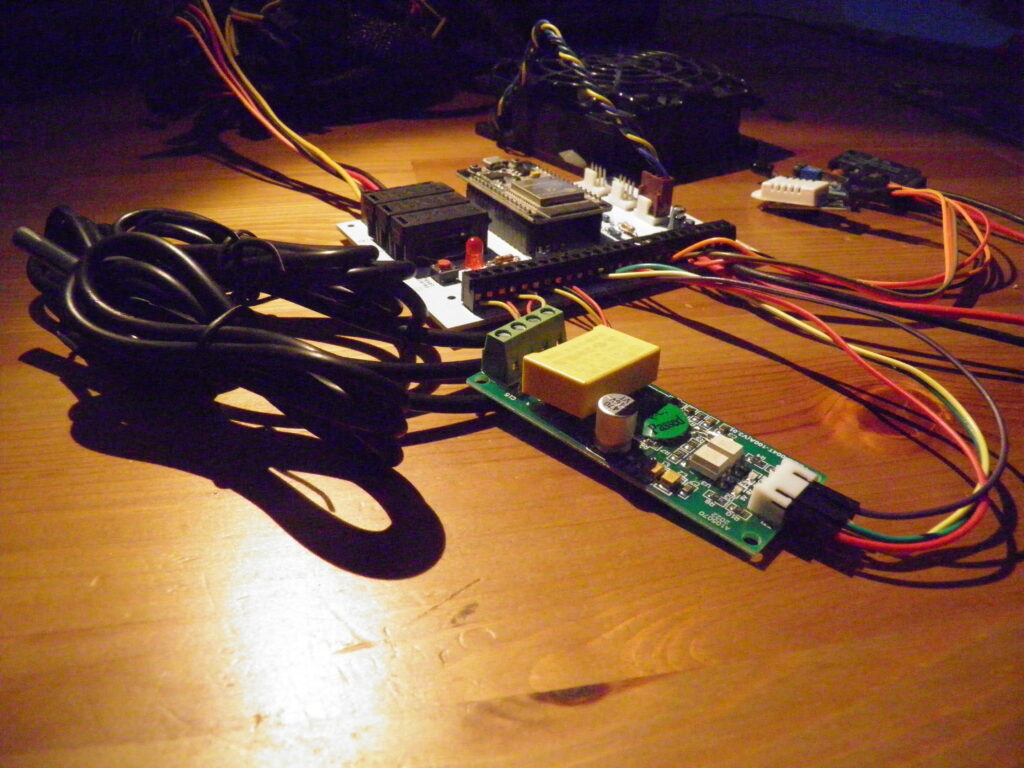
System equipment
The Miner Keeper features are summarized below, and the related features will be described in more detail.
- Internet connection via wifi
- Access Point functions in the absence of wifi
- Android app with wizard setup to configure your Minerkeeper
- Temperature probes to measure the temperature of the incoming air, temperature of the miner and the temperature of outgoing air
- Sensor for measuring the ambient humidity and temperature
- Module for measuring input voltage, absorbed current and electrical energy used
- Flame detection sensor
- System power connector with voltage measurement circuit
Optional :
- Air valve controlled by a servomotor
- Alarm notifications via email, whatsapp or Telegram
- Sending data to a Thingspeak account to receive your Miner Keeper data even when you are away from him
Functionality and logical scheme
Assuming that the system has been correctly assembled and installed, the startup procedure includes the following points.
- When Miner Keeper is turned on, the libraries necessary for operation are loaded and the system is initialized.
- The presence of a previous configuration is checked and if so the variables are loaded
- Any existing configuration is published on the serial channel for debugging purposes.
- A calibration procedure is started to measure the input voltage of 3.3, 5 and 12 volts
- Wi-fi system is started. If it is the first configuration and there are no saved wifi connections, an Access Point is started with the following configuration :
- IP address 192.168.4.1
- username “Minerkeeper”
- password “123456789”
- The web server that the Android app can access is prepared and started. These pages can also be viewed from a browser on a computer on the same local network as Minerkeeper.
- The flame sensor is activated
- OPTIONAL – The air valve setup procedure begins. The valve is moved to its starting position and begins to move slowly. When the valve activates the dedicated switch, rotation is stopped and the data is saved in the configuration.
- The ambient temperature and humidity sensor is started.
- Search for OneWire-based temperature probes (model DS18B20) and assignment of serial numbers to identify them (no need for the user to identify or enter their address).
- OPTIONAL – Thingspeak service is started
- OPTIONAL – Starting the email client
- Starting the fans
How the system works
Miner Keeper constantly monitors a series of parameters of the miner’s operation
- Alarm reset button pressure
- Ambient temperature
- Temperatures (inlet air, miner temperature, outlet air)
- Power supply voltage (3.3V, 5V and 12V)
- Miner’s power line values: mains voltage, current draw, power used and energy consumed
- Fans speed
- OPTIONAL – send data to Thingspeak. Thingspeak’s free account allows you to save up to 8 values (actually these data are saved: miner temp, ambient temp, fan1, fan2, fan3, energy and hashrate). If you activate Thingspeak account you can get all the data from your MK even if you are away from it
- OPTIONAL – Request mining data from the pool. Hashrate, coins earned in 24 hours, balance.
- Possible presence of flame. In case of presence of flame sends an alert email, controls the air valve to the “OUTSIDE” position to evacuate any fumes and then proceeds to shutdown the miner via an electrical contactor
- OPTIONAL – Air valve control in case the setting is AUTO. If the ambient temperature is 1°C higher than the value set by the user, it controls the air valve and directs the heat outside. If the ambient temperature is 1°C lower than the value set by the user, it controls the air valve and directs the heat inside
- Miner Cooling Fan Control. If the miner temperature is 2°C higher than the value set by the user, it accelerates the fan speed up to a maximum of 100%. If the miner temperature is 2°C lower than the value set by the user, it decelerates the fan speed up to a minimum of 10% (reduction of the generated noise)
Android app
The Android app is an important tool because it allows you to configure your Minerkeeper and subsequently gives you access to the data it generates.
The app features a scrolling menu at the bottom of the screen that allows you to advance through the pages.
The sequence of pages is as follows: Home, Add new miner (setup wizard), Choose miner (read your Minerkeepers’ data), Settings, About (credits).
The app allows you to view different data in different ways. If you’re on the same local network as your Minerkeeper you can access all the live data.
If you’re connected to the internet and have activated the Thingspeak feature, you’ll have access to all the data with a minimum delay (20 seconds, you may edit this value in your ESP32 code).

Considerations
Miner Keeper represents a valuable complementary system to support mining in a sector where there are currently no competitors.
The project’s advantages are its scalable features, open source design and the easy availability of the necessary components for assembly.
The project is being developed based on miners’ needs, and new features will be added, allowing users to upgrade their systems.